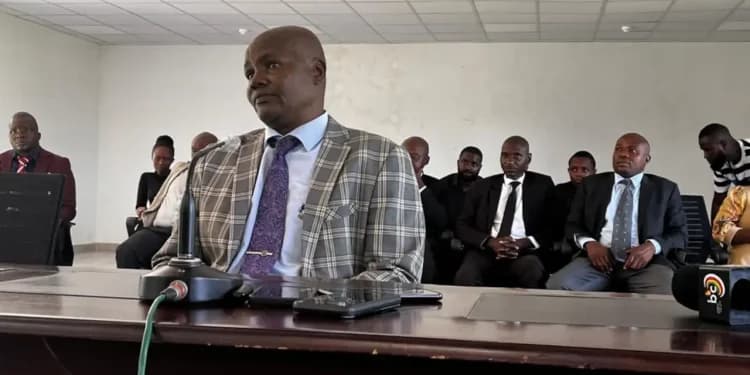
Matthew Marara, a senior Harare City Council official who fabricated an executive position for himself and drew US$12,000 a month from ratepayer funds, has been dismissed following a disciplinary hearing that found him guilty of multiple offences.
The termination, effective 24 November 2025, was confirmed in a letter signed by acting town clerk Phakamile Mabhena on 11 March 2026. Marara had been suspended since 2020.
Harare City Council, the local authority responsible for running Zimbabwe's capital, has been under intense scrutiny over governance failures that have left residents without reliable clean water, functional sewage systems, or consistent refuse collection. The Marara case has become a focal point of a broader commission of inquiry into council mismanagement, chaired by Justice Maphios Cheda.
How a retired official invented an executive job
Marara originally served as the council's housing director before being suspended in 2020 alongside other officials. Rather than departing on suspension, he returned to council after his retirement and promoted himself to the position of executive assistant to the town clerk, a post that did not exist in the council's approved staff establishment.
In that self created role, he negotiated a monthly package of US$12,000 inclusive of salary, allowances, motor benefits, housing, medical aid, education allowances for his children, entertainment, golf benefits, security and airtime.
On an annualised basis, the package totalled US$144,000, a figure investigative journalist Hopewell Chin'ono noted exceeds the annual salary of the President of Portugal, who earns approximately US$108,400 per year.
His approved perks included US$8,000 for electronic gadgets, US$3,256 for newspaper subscriptions, US$3,700 for a laptop allowance and US$2,550 for a cell phone allowance among others.
Suspended, then paid six figures for doing nothing
The disciplinary commission heard that despite being suspended, Marara negotiated a compensation package for the duration of his absence.
Testifying before the Cheda commission in January 2025, Marara said a negotiating committee had agreed to pay him US$131,000, of which he had already received US$116,000.
"I am claiming US$320,000 but what was agreed was US$131,000. I am claiming the whole amount from the time I was suspended in 2020. When I went to the negotiating committee, they offered US$81,000 and I rejected it, then we settled at US$131,000," Marara said.
The compensation panel comprised four city councillors, Kadzombe, Mapanzure, Ngadziore and Chakaredza, and an external legal practitioner named Zinhemha, all appointed by the Mayor.
The disciplinary board ultimately found Marara guilty of being absent from work for more than five consecutive days without authorised leave after he stopped reporting for duty in early November 2024.
He was also found to have facilitated the unauthorised appointment of three senior employees, including himself, resulting in the group receiving benefits totalling ZiG 4,111,168.88 and US$18,362.05 without council approval.
Council confirms terminal benefits still owed
Despite his dismissal for corruption and gross misconduct, Harare City Council has confirmed it will process and pay Marara's terminal benefits, meaning he may yet receive a further payout from the public purse.
The case has drawn sharp criticism from civil society groups and residents who pay council rates while services have collapsed.
Harare's water treatment plants operate far below capacity, and large parts of the city rely on boreholes or purchased water.
The Cheda commission continues to hear evidence on broader mismanagement at the council, and its findings are expected to inform reforms to council governance structures.
For residents enduring Harare's daily service delivery failures, the Marara saga is a precise illustration of what their rates have been funding.
Additional reporting sourced from iHarare. The Granite Post has independently verified key details.