New technologies showcased at the Deaflympics in Tokyo are transforming how deaf fans experience live sport by converting sound into visual and tactile experiences.
The innovations were tested during the 2025 Deaflympics, one of the world’s largest sporting events for deaf athletes, where engineers and designers worked closely with deaf users to make sporting events more accessible.
Instead of relying solely on sound, technologies introduced at the games allow spectators to see and feel the atmosphere of competition through visual graphics, text-based announcements and vibration devices.
Visualising sound in sport
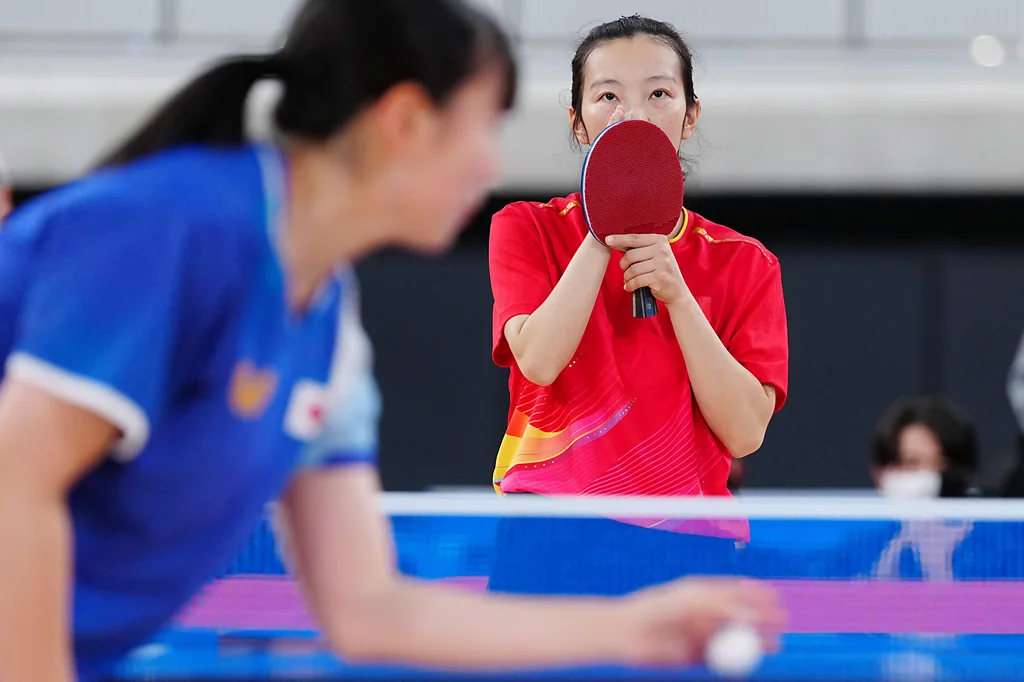
Inside the table tennis arena, animated graphics displayed above the court translated the sounds of play into visual Japanese onomatopoeic characters.
These visual cues represented the impact of the ball, the pace of rallies and the power of smashes, allowing spectators to understand the rhythm of the game without relying on audio.
Onomatopoeia, words that imitate sounds, are widely used in Japanese culture, particularly in manga and media. At the Deaflympics, they were used as an accessibility tool to visually represent sounds during sporting events.
Ito Maki from Japan’s Deaf Table Tennis Association said the technology helps spectators better understand the sport.
“I used to be a table tennis player, so I prefer to watch the matches themselves,” he said. “But for people who don't play, or who are deaf, this helps them understand better.”
AI and real-time translation
Across Tokyo, new technologies were also tested in public transport systems used by athletes and spectators attending the games.
Transparent screens developed by printing company Toppan were installed at several metro stations, translating spoken announcements into text to assist deaf passengers.
Technology company Fujitsu also introduced an artificial intelligence display system capable of listening to station announcements, warning signals and approaching train sounds before converting them into text and sign language.
Tatsuya Honda of Fujitsu’s Converging Technologies Laboratory said the system was designed in collaboration with deaf students.
“We designed this device with deaf students to make it fun, safe and useful,” he said.
Feeling sport through vibration
In the judo arena at Tokyo Budokan, spectators wore vibration devices developed by Hapbeat that allowed them to feel movements taking place during matches.
Microphones and sensors placed around the mat captured the sounds of athletes’ movements. These were then translated into vibrations delivered through wearable devices worn by fans.
Footsteps produced lighter vibrations while collisions and throws generated stronger sensations.
Deaf judo fan Eri Terada said the technology helped her understand the flow of the match.
“When someone was thrown, it was a heavy thud. Each one was different. I thought, ‘Wow – this is amazing. It’s so easy to understand,’” she said.
Expanding accessibility beyond sport
Technology was also used during cultural events linked to the Deaflympics.
At one music performance, spectators held Sound Hug devices developed by Tokyo startup Pixie Dust Technologies. The devices vibrated and displayed lights in response to music, allowing users to experience rhythm and emotion through touch and visual cues.
Indian golfer Diksha Dagar, a Deaflympics gold medalist, said the technology allowed deaf users to connect with music.
“We can feel the music and the vibrations,” she said. “It tells us about the sound, so it’s interpreted for deaf people.”
Experts say the Deaflympics has become an important testing ground for inclusive technology, where innovations designed for accessibility can benefit wider audiences.
By focusing on accessibility from the start, developers are exploring new ways to ensure that live sport and entertainment can be experienced by everyone.