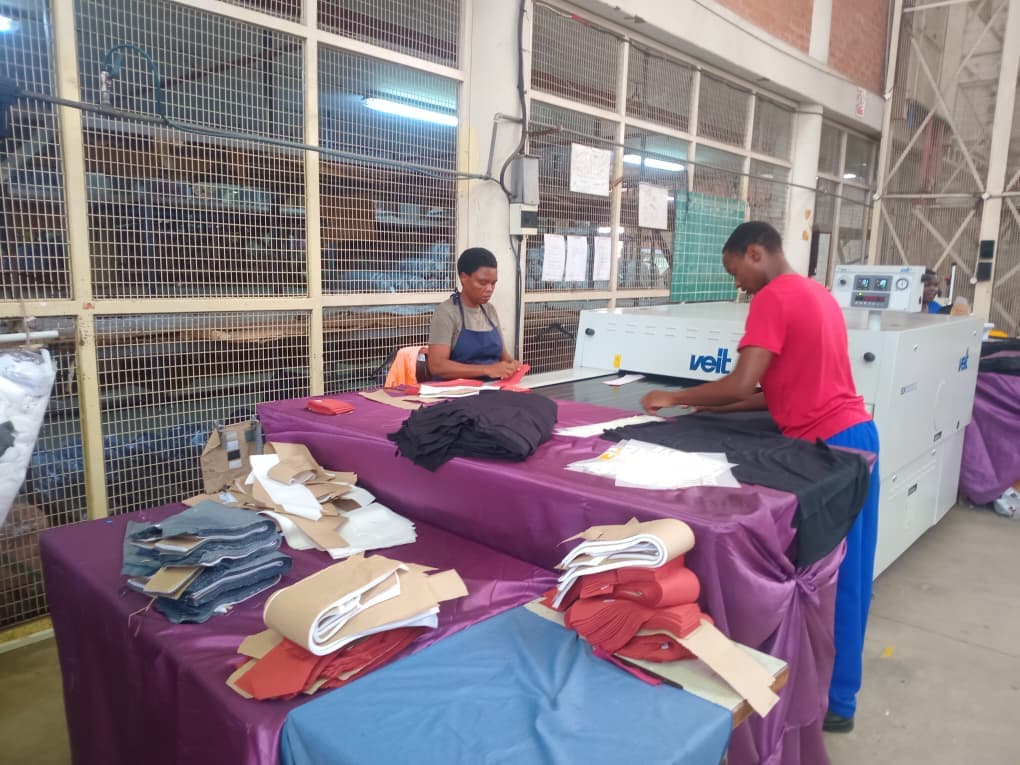
Bulawayo’s manufacturing comeback is being driven by a new workforce: young designers, technicians, and trainees now embedded inside factories as companies retool and modernise production.
The shift matters because Bulawayo’s industrial collapse over the past two decades hollowed out skilled jobs, pushed households into informal work, and left the city dependent on trade rather than production. A revival, even gradual, changes the city’s economic direction.
Young innovators move from student placements to permanent jobs
ZBC reported that youths from institutions including Bulawayo Polytechnic College and Chinhoyi University of Technology are supporting design, production, and technical processes as firms upgrade machinery and adopt new methods.
One student described turning a placement into a job after gaining practical skills on the factory floor.
“I came here as a student designer, but today I can safely say that after enhancing my practical knowledge, the organisation went on to give me a job, and I am very grateful for this opportunity.”
Student designer (as quoted by Zimbabwe Broadcasting Corporation)
The story also points to a second pipeline: on-the-job training for previously unskilled youths, a route that can widen opportunity in a city where formal hiring has been constrained for years.
“I came here with no skill whatsoever, but now I am really grateful for this opportunity. I do not take it lightly.”
Factory trainee (as quoted by Zimbabwe Broadcasting Corporation)
Policy and training links are becoming the operating model
Carousel Managing Director Menfree Tanyanyiwa said policy interventions under the National Development Strategy One (NDS1) strengthened collaboration between industry and academia, which he described as critical to restoring Bulawayo’s industrial role.
“NDS1 has had a profound impact on how we do business. It has helped build linkages between industries and tertiary institutions.”
Menfree Tanyanyiwa, Managing Director, Carousel (as quoted by Zimbabwe Broadcasting Corporation)
He said those linkages could help the city reclaim its position as Zimbabwe’s manufacturing hub.
What the report leaves unclear, and what readers should watch
The story signals momentum, but it does not quantify the scale: how many factories are retooling, how many jobs are being created, and whether the new roles pay wages that can compete with informal trade earnings.
If the revival is real, the next indicators will be measurable. Increased output volumes, consistent power availability for industry, and a sustained transition from short-term attachments to permanent employment contracts.
What happens next
The question now is whether the retooling wave spreads beyond a few firms into a citywide pattern, or whether it stalls at pilot-scale projects that look promising but never become the new normal.
Additional reporting sourced from Zimbabwe Broadcasting Corporation. The Granite Post has independently verified key details.