
Zimbabwe, Zambia sign US$2.18bn rail MoU to cut freight costs
Zimbabwe Zambia rail MoU aims to cut freight costs and shorten cargo routes with a US$2.18 billion Lion’s Den-Kafue railway project.
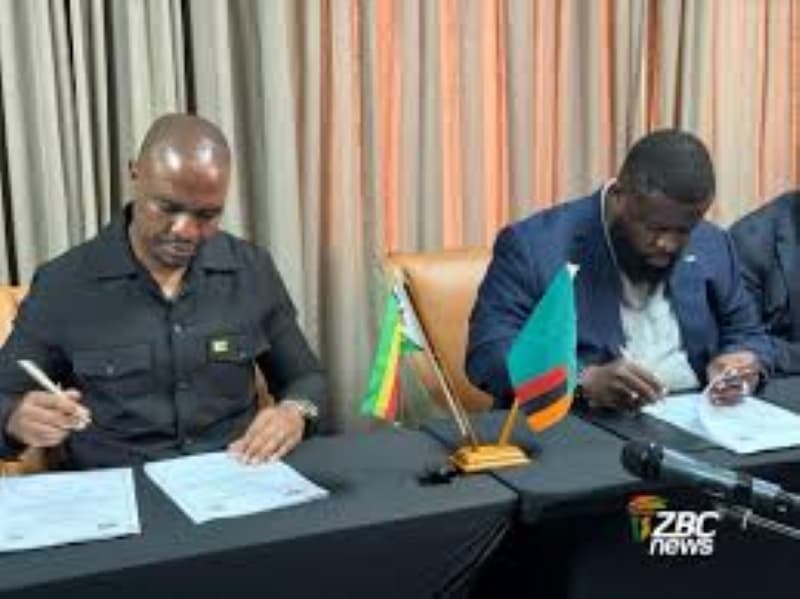
Zimbabwe and Zambia have signed a Zimbabwe Zambia rail MoU for a new cross-border railway line designed to cut cargo distances, lower freight costs and reshape regional trade routes across southern Africa.
The agreement covers the proposed Lion’s Den-Kafue railway, a 311-kilometre corridor linking Kafue in Zambia to Lion’s Den in Zimbabwe. On paper, the project is about connectivity. In practice, it is about whether the region can finally turn long-discussed transport integration into working infrastructure that moves goods faster and more cheaply to port.
The line forms part of a wider southern African transport contest in which countries are trying to secure shorter, cheaper and more reliable export routes to the sea. For Zimbabwe, that means protecting access to the Beira corridor in Mozambique while reducing dependence on longer regional freight paths.
The rail deal was signed in Victoria Falls
Zimbabwe’s Minister of Transport and Infrastructural Development, Felix Mhona, and Zambia’s Transport and Logistics Minister, Frank Tayali, signed the Memorandum of Understanding during the Emerging Railways Properties Council of Ministers meeting in Victoria Falls.
The proposed railway will run through Chirundu, Hurungwe National Park, Makuti, Denis and Chakuti. Officials say it will include 16 stations and two marshalling yards.
It is planned on the 1,067mm Cape Gauge, with provision for future conversion to standard gauge. That matters because it keeps the project compatible with existing regional rail systems while leaving open the possibility of later upgrades.
The core promise is shorter cargo routes to port
The project’s selling point is simple: distance.
Officials say the route would cut about 800 kilometres to the Port of Beira compared with the North-South corridor, reduce the distance to South African ports by 1,000 kilometres, and shorten the route to Dar es Salaam by about 500 kilometres.
If those savings hold in practice, the line could materially lower transport costs for bulk cargo, improve delivery times and make regional trade corridors more competitive. That is the real commercial case for the railway, not the ceremony around the signing.
The project price tag is high and the delivery burden is higher
Zimbabwe’s Transport Ministry Permanent Secretary, Engineer Joy Makumbe, said the railway is projected to cost US$2.18 billion, with 94 kilometres in Zambia and 217 kilometres in Zimbabwe.
She also said Zimbabwe would rehabilitate a 445-kilometre stretch to the Machipanda border post to support uninterrupted freight movement to the Mozambican coast. That detail is crucial because the new line only works strategically if the wider corridor behind it also works.
This is where the real test begins. Signing a memorandum is the easy part. Financing, land, construction, cross-border coordination and corridor reliability are what decide whether a railway project changes trade or joins the long list of regional infrastructure promises that never move beyond paper.
Mozambique’s role could decide whether the corridor works
Makumbe said Mozambique’s cooperation remains essential for uninterrupted access to Beira.
That is the structural point that should not be buried. Zimbabwe and Zambia can sign a bilateral rail deal, but the corridor’s commercial value depends on a third country keeping the onward route viable. A shorter railway means little if port access, border handling or downstream rail rehabilitation fails.
That makes this project regional by necessity, not by slogan.
The bigger question is whether southern Africa can execute, not just announce
Southern Africa does not lack transport plans. It lacks enough completed, efficient infrastructure linking mines, factories and inland producers to ports at competitive cost.
If the Lion’s Den-Kafue line is built on schedule and tied into a functional Beira route, it could shift freight patterns across the region. If it stalls at the MOU stage, it becomes another expensive symbol of ambition without delivery.
What matters now is not that Zimbabwe and Zambia have signed a rail agreement, but whether they can raise the money, align the corridor and build a line that finally makes regional trade move the way ministers keep promising it will.




Comments
No comments yet. Be the first.