HARARE - The Zimbabwean government has confirmed a salary adjustment for civil servants, effective April 1, 2026, following a job evaluation exercise meant to align pay with roles and responsibilities across the public sector.
Public Service and Labour Minister Edgar Moyo announced the changes at a media briefing in Bulawayo. He said the review reflects the government's commitment to worker welfare, though specific figures were not immediately disclosed at that event. Subsequent reporting has confirmed that the lowest-paid worker will now earn US$296, up from US$253.
The announcement landed against a charged backdrop. The Zimbabwe Nurses Association (ZINA) has formally served notice of a nationwide strike set to begin on April 15, 2026. Nurses are demanding better pay, payslips, and improved conditions, and have given the government until mid-month to respond.
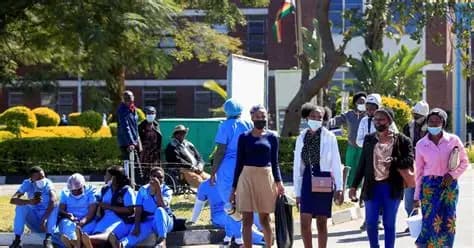
Demonstrations have already taken place at Sally Mugabe Central Hospital, Parirenyatwa Group of Hospitals, and Marondera Provincial Hospital. Nurses in Gweru, Kwekwe, and Zvishavane also issued a 48-hour ultimatum in late March, signalling the depth of discontent.
Fuel price increases, driven by tensions in the Middle East, have worsened the crisis. Some nurses have reportedly been walking long distances to work because transport costs have eaten into their already thin earnings.
The Zimbabwe Congress of Trade Unions (ZCTU) has backed the nurses, urging them to hold firm until the government addresses their concerns. The ZCTU called it "embarrassing" that nurses felt compelled to strike despite a deputy minister's recent claim that civil servants now earn above the Poverty Datum Line.
The Progressive Teachers Union of Zimbabwe (PTUZ) has also rejected the job evaluation outcomes, casting further doubt on whether the April adjustment will ease tensions across the civil service.
Economist Gift Mugano has urged transparency: "The structure is important, but workers will be looking closely at the actual figures and whether they meaningfully improve purchasing power."
The three-day strike window, April 15 to 17, gives the government roughly two weeks to negotiate or risk a disruption to an already strained public health system.