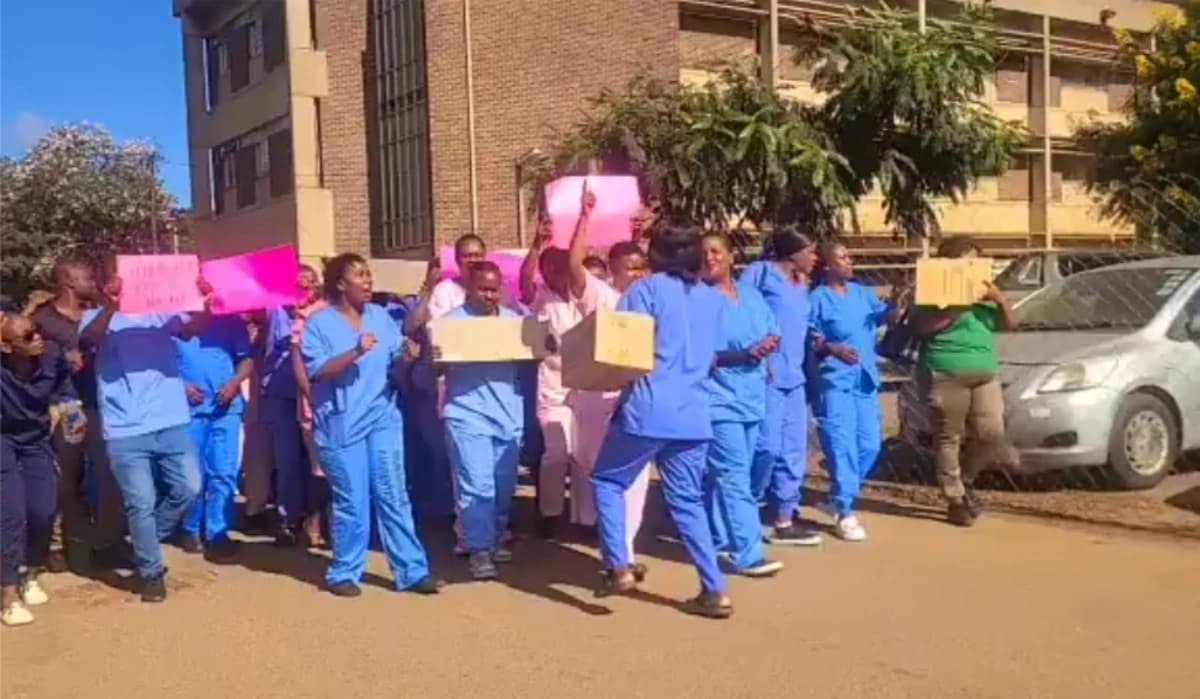
HARARE - Nurses at Parirenyatwa Group of Hospitals downed tools on Monday 23 March 2026, abandoning wards and leaving patients stranded in what has become a rolling wave of industrial action across Zimbabwe's public health system.
The Parirenyatwa walkout followed a similar protest at Sally Mugabe Central Hospital on Friday 21 March, where nurses held placards demanding salary adjustments. By Tuesday, staff at Chitungwiza Central Hospital had also stopped working. In the Midlands, the Zimbabwe Nurses Association submitted a formal petition to authorities from health workers across Gweru, Kwekwe, Zvishavane and Gokwe, giving the government 48 hours to respond before a full provincial strike.
The nurses' core grievances, documented in a notice dated 23 March from the ZINA information desk, include very low basic salaries now described as below the living standard, exclusion from cost-of-living adjustments, unexplained deductions on March salaries, and the absence of payslips since April last year. On top of those long-standing issues, two rounds of fuel price hikes this month have made commuting prohibitively expensive.
Nurses currently earn approximately US$450 per month, paid in a combination of US dollars and ZiG. Their transport allowance stands at ZiG500, roughly $15 at the official rate, a figure that covers less than three days of commuting costs for workers living far from their hospitals. Some nurses have been walking more than eight kilometres to reach work after recent fare increases made minibuses unaffordable.
At Parirenyatwa, operations slowed to a near standstill on Monday, with student nurses stepped in to keep critical units functioning.
The Zimbabwe Congress of Trade Unions expressed full support for the strike on 24 March. ZCTU Secretary General Tirivanhu Marimo said: "For years, medical workers have been calling for improved working conditions, enforceable staffing ratios and have been patient for too long while the government has been dragging its feet."
Health and Child Care deputy minister Sleiman Kwidini acknowledged the situation on 24 March, saying the government was aware of the problem and working on solutions, but added that the spike in transport costs was unanticipated because it arose from a global crisis. Health Service Commission Public Relations Officer Kudzayi Manyepa urged nurses to lodge grievances through formal channels, saying the concerns would be addressed.
Nurses rejected that framing. "Nurses are the first port of call for all clients visiting hospitals," one health worker said. "Yet they are blamed for systemic resource shortages, while officials seem focused on workshops and lining pockets instead of delivering services."
Zimbabwe has seen repeated cycles of nurse strikes over the past decade. Each time, the government has offered short-term allowances or partial adjustments that quickly lose value to inflation. Thousands of qualified health professionals have left the country for better-paying positions abroad, leaving public hospitals chronically short-staffed.
At the time of publication, no formal resolution had been reached. The 48-hour ultimatum issued by Midlands nurses has expired without a confirmed government response.