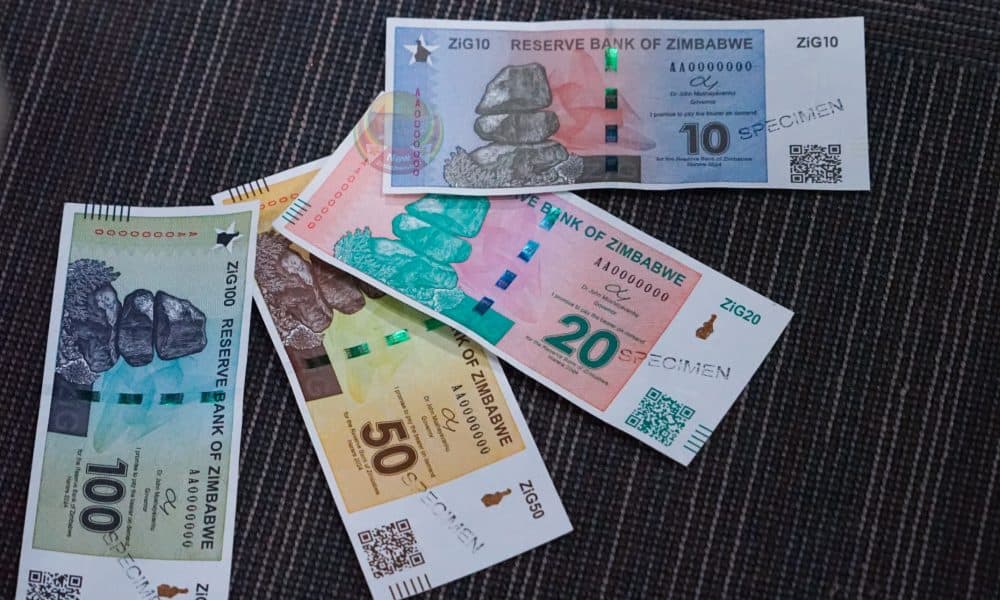
HARARE - The Reserve Bank of Zimbabwe will release a redesigned series of ZiG banknotes on 7 April 2026, exactly two years after the gold-backed currency was first launched, with new animal motifs and higher denominations intended to address the chronic shortage of usable notes in everyday transactions.
The initial release on 7 April will cover ZiG10, ZiG20 and ZiG50 denominations. ZiG100 and ZiG200 notes will follow later in 2026. The new notes replace the original 2024 series, which carried the Domboremari rock formation and a QR code on the front face.
The launch arrives at a moment of relative monetary calm. Annual inflation fell to 4.1 percent in January 2026 and eased further to 3.85 percent in February, the lowest reading in over three decades. Foreign currency reserves reached approximately US$1.2 billion by the end of 2025, equivalent to 1.2 months of import cover, up from US$276 million when the ZiG was introduced in April 2024. The ZiG was trading at approximately 25.57 to the US dollar at the official interbank window in late February 2026.
Despite that progress, the ZiG's everyday adoption remains uneven. While the currency now accounts for roughly 40 percent of daily transactions, the informal sector continues to settle most trades in US dollars. The government's response has been a directive from Treasury requiring all government ministries to pay local suppliers exclusively in ZiG beginning this year, designed to drive adoption from the top down.
The higher denomination notes address a practical problem that has frustrated ordinary Zimbabweans since the currency's launch: the absence of large enough notes to cover daily purchases without carrying large volumes of low-value paper. Commuters have consistently reported difficulty paying transport fares in ZiG because drivers lack change, and market vendors face similar problems.
This is Zimbabwe's sixth attempt at a functioning local currency since the catastrophic hyperinflation of 2008 destroyed the original Zimbabwe dollar. The ZiG lost nearly half its official value in its first six months and was devalued 43 percent in September 2024. Since the RBZ tightened monetary policy in late 2024, it has stabilised on the official market, though a parallel market premium of roughly 20 percent persists according to Oxford Economics.
The April 7 release date is an anniversary gesture as much as a monetary policy tool. Whether the new notes translate to greater public confidence will depend less on their design than on whether the exchange rate holds through the second quarter, particularly as fuel price increases from the Iran conflict continue to push up costs across the economy.